Exploring the impact of Electronic Health Records (EHRs) on patient care opens up a world of possibilities in modern healthcare. From revolutionizing patient care to improving efficiency, EHRs play a crucial role in shaping the future of healthcare.
Importance of Electronic Health Records (EHRs)
Electronic Health Records (EHRs) play a crucial role in modern healthcare by digitizing patient information, enabling healthcare providers to access, update, and share data efficiently. This shift from paper-based records to electronic systems has revolutionized patient care in numerous ways.
Improved Patient Care
EHRs have significantly improved patient care by providing healthcare professionals with instant access to a patient's medical history, test results, medications, and treatment plans. This accessibility allows for quicker and more accurate decision-making, leading to better outcomes for patients. For example, in emergency situations, having immediate access to critical information through EHRs can be lifesaving.
Enhanced Efficiency in Healthcare Settings
One of the key benefits of EHRs is the increased efficiency they bring to healthcare settings. By streamlining processes such as appointment scheduling, billing, and prescription refills, EHRs save time for both healthcare providers and patients. Moreover, EHRs reduce the risk of errors caused by illegible handwriting or lost paper records, ultimately improving patient safety.
Integration of Telemedicine
EHRs have facilitated the integration of telemedicine into healthcare practices. With the ability to securely share patient data remotely, healthcare providers can offer virtual consultations and monitor patients from a distance. This has proven especially valuable in the current era of telehealth, where EHRs allow for seamless communication and continuity of care.
Advantages for Patient Care
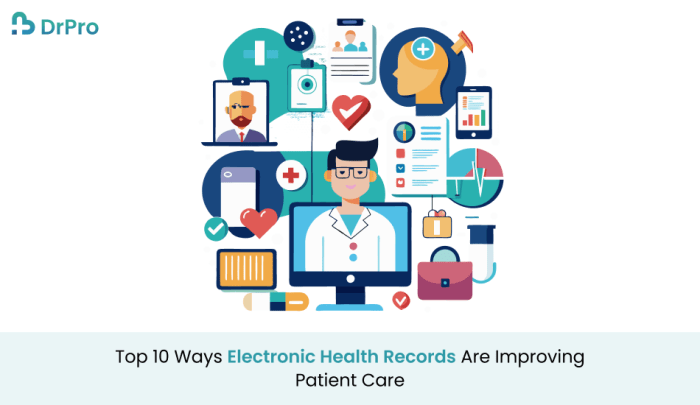
Electronic Health Records (EHRs) play a crucial role in enhancing patient care by providing healthcare providers with easy access to patient data, promoting better coordination among healthcare teams, and reducing medical errors to improve patient safety.
Enhanced Patient Data Accessibility
- EHRs allow healthcare providers to access patient information quickly and efficiently, leading to better decision-making and more personalized care.
- Providers can view a patient's medical history, test results, medications, and other essential data in real-time, enabling them to deliver timely and accurate treatments.
- Having comprehensive patient data at their fingertips helps providers identify potential health risks, track progress, and ensure continuity of care.
Better Coordination of Care
- EHRs facilitate communication and collaboration among healthcare teams by enabling secure sharing of patient information across different departments and disciplines.
- Providers can easily update and access patient records, ensuring that all team members are on the same page regarding treatment plans, appointments, and follow-ups.
- Improved coordination leads to more efficient care delivery, reduced redundancies, and a seamless transition between different healthcare settings.
Reduced Medical Errors and Improved Patient Safety
- EHRs help prevent medical errors by providing decision support tools, such as alerts for drug interactions, allergies, and dosage recommendations.
- By standardizing documentation and order entry processes, EHRs minimize the risk of errors due to illegible handwriting or misplaced paper records.
- Enhanced data accuracy and accessibility contribute to a safer care environment, reducing the likelihood of adverse events and improving overall patient outcomes.
Impact on Communication and Collaboration
Electronic Health Records (EHRs) play a crucial role in enhancing communication and collaboration among healthcare professionals, ultimately leading to improved patient care.
Facilitation of Communication
EHRs enable seamless communication between healthcare professionals by providing a centralized platform for sharing patient information. This allows physicians, nurses, specialists, and other staff members to access real-time data, such as test results, treatment plans, and medication history, leading to more informed decision-making.
Enhanced Collaboration for Holistic Patient Care
With EHRs, healthcare providers can collaborate more effectively to deliver holistic patient care. For instance, a primary care physician can easily share relevant patient information with specialists or allied health professionals, ensuring coordinated and comprehensive treatment plans. This interdisciplinary approach leads to better health outcomes for patients.
Streamlining Information Sharing among Healthcare Facilities
EHRs streamline the sharing of patient information among different healthcare facilities, such as hospitals, clinics, and laboratories. This interoperability allows for the seamless transfer of medical records, reducing duplication of tests, minimizing errors, and improving continuity of care. For example, a patient who visits an emergency room can have their medical history instantly accessed by the healthcare providers, regardless of the facility they are in.
Patient Empowerment and Engagement
Patient empowerment and engagement are crucial aspects of modern healthcare, and electronic health records (EHRs) play a significant role in fostering these qualities among patients. By providing individuals with access to their health information, EHRs empower patients to take an active role in managing their own healthcare journey.
Access to Health Information
- Patients can view their lab results, medication lists, visit summaries, and other pertinent health information through secure online portals linked to EHR systems.
- Having access to real-time health data enables patients to stay informed about their conditions, treatment plans, and progress, leading to increased engagement in their care.
- Empowered patients are more likely to ask questions, seek clarifications, and actively participate in decisions regarding their health, ultimately leading to better health outcomes.
Patient Education and Shared Decision-Making
- EHRs provide a platform for healthcare providers to share educational resources, videos, and personalized health information with patients, enabling them to make informed decisions about their health.
- Through EHRs, patients can access educational materials related to their diagnoses, treatment options, preventive care measures, and lifestyle modifications, facilitating a deeper understanding of their health conditions.
- Shared decision-making is enhanced as patients and providers can review information together, discuss available options, and collaboratively choose the best course of action based on individual preferences and goals.
Summary
In conclusion, the transformation brought about by Electronic Health Records in patient care is profound and far-reaching. As we embrace this digital evolution, the possibilities for enhanced patient outcomes and streamlined healthcare processes are endless.
Detailed FAQs
How do Electronic Health Records improve efficiency in healthcare settings?
Electronic Health Records streamline processes by providing quick access to patient data, reducing paperwork, and minimizing errors.
What role do Electronic Health Records play in patient empowerment?
EHRs empower patients by giving them access to their health information, encouraging active participation in their healthcare decisions.
How do Electronic Health Records facilitate communication between healthcare professionals?
EHRs enable secure and efficient communication among healthcare providers, ensuring timely sharing of vital patient information.